
See It To Be It Spotlight
Founder & Chairman, Institute for Critical Infrastructure Technology (ICIT)
Executive Vice President, CyberRisk Alliance
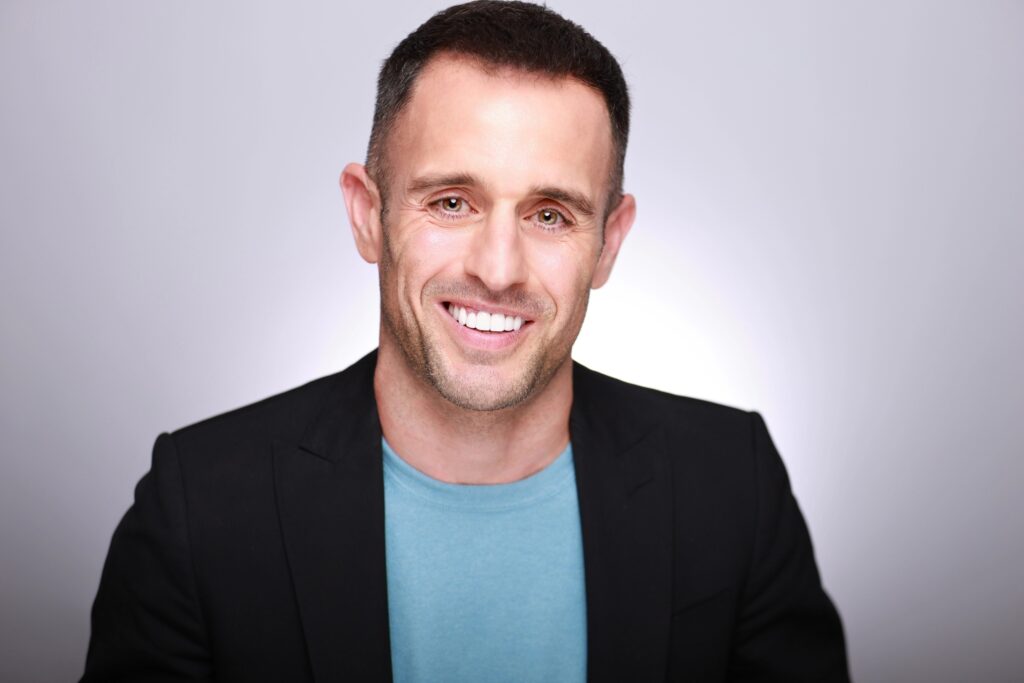
Please introduce yourself.
I’ve always been an entrepreneur, so a common theme in my professional life is building things. I build (or help others build) communities, companies, products, and teams at the intersection of cybersecurity, emerging technology, critical infrastructure, and public policy. My primary role today is Executive Vice President at CyberRisk Alliance, where I lead a portfolio of businesses with a shared mission to strengthen the cybersecurity workforce through professional and leadership development. I’m also the Founder and Chairman of the Institute for Critical Infrastructure Technology (ICIT), a nonpartisan think tank with a mission to modernize, secure, and make more resilient the critical infrastructures that provide for people’s foundational needs, in addition to other advising and mentorship activities.
How did you get into cybersecurity?
I’m one of the lucky people who found my way into cybersecurity and national security completely by accident. I am a graduate of the University of Wisconsin – Madison Grainger School of Business (Go Badgers!) with degrees in Marketing, International Business, and French. I did what most business students do after college – consulting – but was always dreaming about starting my own business. One summer afternoon in 2006, I was walking down Clark St in Chicago and heard a bar playing country music (one of my favorites) so I popped in and ended up talking to a girl (I say girl because we were both kids back then!) who happened to be an events planner doing government technology events. We got to talking and before you know it I told my folks I was quitting my job and starting an events business!
Keep in mind I had no background in cybersecurity, technology, government, or event planning — but the idea sounded exciting, and I jumped at the opportunity. We launched the Government Technology Research Alliance and started to host 2-3 day offsite events for senior federal government technology and national security leaders. This was the launching pad for my career.
After 6 or 7 years, I was ready for my next endeavor and to strike out on my own. During that time and through hundreds of interviews, sessions, and events, I became aware of a major gap in communication and collaboration between policymakers, federal agencies, and the private sector — a gap I felt nobody was effectively addressing. After doing some research, I realized there was a real need for a nonpartisan, vendor-neutral education in this space, particularly as it related to the 16 Critical Infrastructure sectors defined by a relatively newly created Department of Homeland Security. And even though I had no formal cybersecurity or policy training, I launched the nation’s first think tank focused exclusively on critical infrastructure modernization and resilience: ICIT. And thanks to this amazing community, I’ve been able to build off of that decision to enjoy the career I have today.
What skill helped you transition to (and thrive in) a cybersecurity career?
I love this question because what I’m about to share has literally transformed my life. In short: I learned to live an authentic life.
Here’s what I mean: I’ve spent nearly two decades in the cyber and national security space and have had the true honor of supporting and working alongside some of the most impactful figures in our industry and learning from this community. That said, my passion and natural talent isn’t in computer science, mathematics, or engineering. My first loves are leadership, relationships, helping people, and building things. For most of my career, I believed that to “belong” in this field and be successful meant becoming a technical expert or developing deep policy and legal policy expertise. Why? Because everyone I was around – CISOs, CIOs, Military and Intelligence leaders – were all experts in those areas. I always viewed what I did as not special and not particularly important. These folks were saving the world! I was just bringing them together to talk about it. As a result, I spent a lot of my time trying to be something I’m not. Instead of engaging with the community by leaning into the things I loved most and that came naturally to me – relationships, community building, communication, and leadership – I tried to engage on things like technology, frameworks, and the latest tech trend.
The breakthrough for me came after years of self-reflection, reading, meditating, and conversations with friends when I realized two things: 1) People weren’t engaging with me because they hoped I was something else, but because they valued me and what I brought to the table. 2) The more I embraced and lived my authentic self at work and at home, the more I was achieving my goals and the happier I became.
So today, I am confident to get on a stage in front of thousands of people and talk about cybersecurity and national security, or participate in a boardroom discussion with F500 executives. But my confidence isn’t because I’ve become someone I’ve not. It’s because I’ve applied who I am to the work that I do. Living your best authentic life doesn’t mean avoiding growth or hard work — it means building your career around the skills and activities that align with who you are, while still pushing yourself to learn. When you do that, you not only hit your goals; you create more impact for colleagues, customers, and the community.
What does a positive cyber mindset look like to you?
It depends on perspective, but for organizations, a positive cyber mindset starts with culture — and culture is ultimately expressed through decisions and investments. It’s easy to say cybersecurity is a top priority in an SEC filing, on a website, or from a stage. The real test is whether leaders consistently make choices that put security first; meeting minimum security baselines before deploying products, being willing to trade short‑term revenue and speed-to-market to ensure baseline security features are met, and incentivizing good cyber practices for employees, executives, and partners. Saying “security matters” is the talk; resourcing and enforcing it is the walk.
Taking a step back, as a global economy we prioritize profit, speed to market, and functionality over security — that is the opposite of a positive cyber mindset. The good news however is that we have the technologies, frameworks, and strategies, and in my opinion even the money to meaningfully improve resiliency and security. Ultimately, this comes down to societal priorities: do we value speed, functionality and profitability above all, or are we truly committed to building a world whose technologies and systems protect us — digitally and kinetically.
What would you tell your younger self?
Stop comparing yourself to others. Like I said before, a decade ago, I equated being a successful business leader with becoming a deep technical or policy practitioner — like the CISOs, DoD leaders, and Fortune 500 executives I admired. What I’ve learned is that you earn a seat at the table because of the value you bring, not because people expect you to morph into someone you’re not. Good mentors absolutely see your potential to grow, but your invitation comes from the contribution you’re already making.
The rooms I was in — and the rooms I helped build — weren’t filled with people who thought I’d one day become a different person. They believed in the value I was creating and the communities I was convening. Once I embraced that, everything became clearer and more effective. And life became a lot more fun!
What leadership qualities have been most impactful in your career?
Authenticity is foundational — it makes you both happier and more effective. Alongside that, I put enormous value on kindness, humility, compassion, and empathy. When it comes to kindness – which i talk about often, it’s important to point out that its power isn’t in the act itself — it’s the culture it creates. When you consistently lead with kindness and compassion, you build trust, joy, and stronger relationships. People feel good. They are happy. And as a result, they do better work and are more committed to the mission and to each other. We often focus on quantifiable KPIs like profit, revenue, and productivity when measuring performance and forecasting risks. Those are important, but in my opinion it’s the culture — rooted in authenticity and kindness — that ultimately enables sustained business performance.
Are you ready to take the next step in your cybersecurity journey?
The Cyber Guild connects leaders, practitioners, and emerging talent through events, mentorship, and community.
👉 Explore upcoming events
👉 Subscribe to our mailing list
👉 Learn more about RISE Mentorship